

Published on TopUpMyWallet.co.uk
If you’ve been looking for a creative way to earn some extra income online, you may have come across Zazzle — the American print-on-demand platform that lets you turn your designs into real, physical products without ever touching a printer, handling stock, or packing a single parcel. It’s not the most talked-about side hustle in the UK, but it’s one that quietly ticks along in the background, earning commissions from buyers — mostly in the USA — while you get on with your day.
I run two Zazzle stores myself — MiowandMolly, which focuses on accessories, awareness badges and neurodivergent-themed gifts, and PartyPlannerStore, which is exactly what it sounds like. So everything I’m sharing here comes from real experience, not theory.
What Is Zazzle?
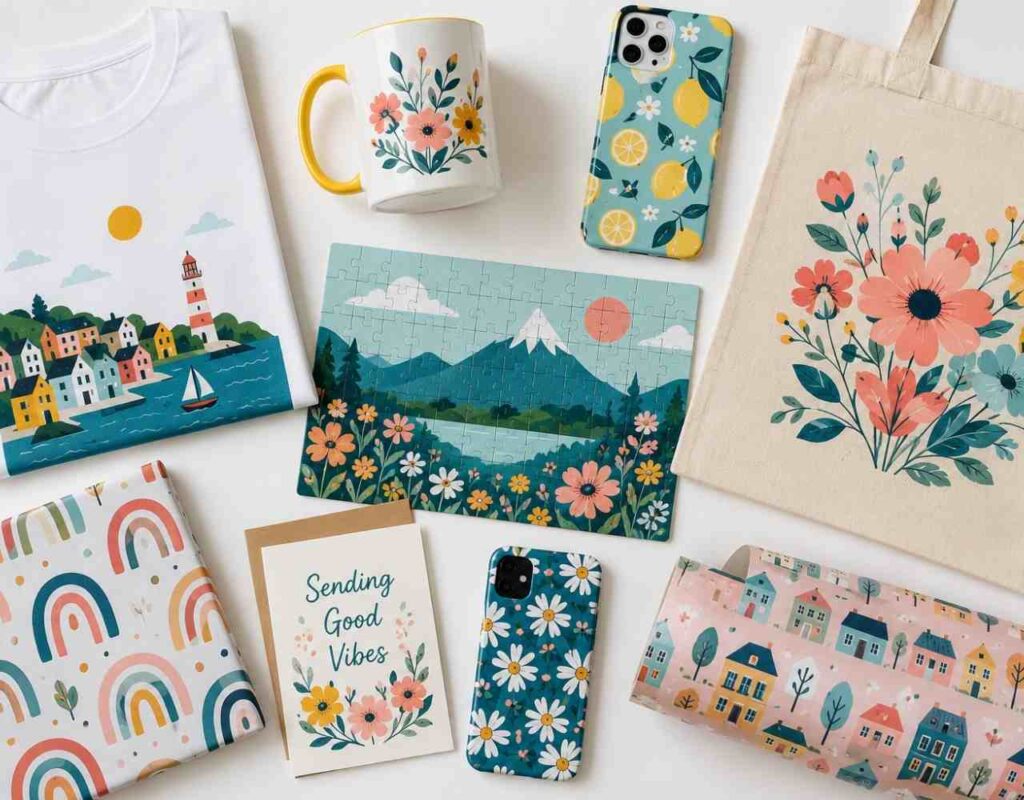
Zazzle is a print-on-demand marketplace that has been around since 2005. You upload your designs, apply them to hundreds of different products — from mugs, t-shirts and tote bags through to wedding invitations, phone cases, jigsaw puzzles and even postage stamps — and Zazzle handles everything else: production, payment processing, shipping, and customer service.
You don’t pay a penny upfront. You don’t hold any stock. When someone buys a product featuring your design, Zazzle prints it, ships it, and pays you a royalty (commission). Simple in principle, genuinely rewarding in practice once you get going.
The main hub for everything is zazzle.com, which is where you’ll set up your store, create your products, manage your earnings and find all the guidance you need.

How Is Zazzle Different from Other Print-on-Demand Sites?
You might already know platforms like Redbubble, Society6 or Merch by Amazon. Zazzle sits in the same general space but stands apart in a few important ways:
Incredible product variety. Zazzle’s catalogue is vast. We’re not just talking t-shirts and mugs — you can put your designs on wedding stationery, postage stamps, wrapping paper, playing cards, coasters, pet bandanas, baby bibs, garden flags and much more. If you enjoy designing across different niches and occasions, Zazzle gives you a creative playground unlike almost any other platform.
You set your own royalty rate. On many POD sites, your commission is fixed. On Zazzle, you choose how much you want to earn on each product, anywhere from 5% upwards. This means you have real control over your pricing strategy.
Full personalisation for customers. Buyers can customise most products directly — changing names, dates, colours and wording themselves. This makes Zazzle incredibly popular for gifts, events and celebrations, which keeps demand strong across a huge range of niches.
Multiple stores under one account. Unlike several competitor platforms, Zazzle allows you to run more than one store from a single account. This is brilliant if you want to keep different design styles or niches completely separate, as I do with my own stores.
A genuinely active community. The Zazzle forum is a warm, helpful place full of experienced creators who are happy to answer questions. If you get stuck on something — whether it’s a design issue, a product query, or figuring out the payment process — someone there will almost certainly have the answer.
Is It Popular in the UK?
Honestly? Not hugely. Zazzle is American through and through, and the overwhelming majority of sales come from US customers. Products are priced in dollars, shipping times for UK buyers can be longer, and some items do come across as expensive compared to what you’d find on the UK high street. It’s not unusual for a UK visitor to browse, admire, and not quite pull the trigger on a purchase.
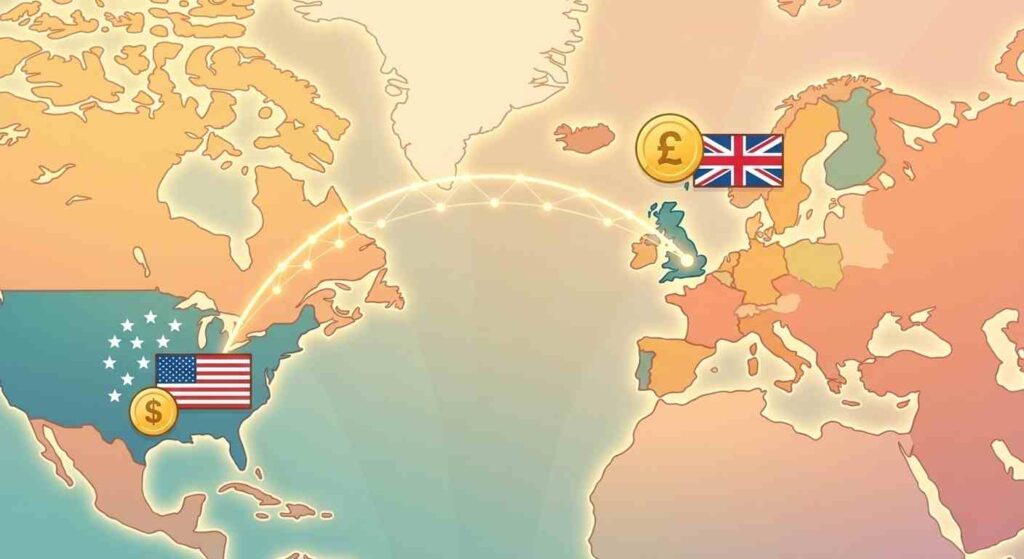
But here’s the thing — that doesn’t matter for us as UK sellers. Because Zazzle’s marketplace is global, your designs can be found by anyone, anywhere. The US market is enormous, and US customers are very comfortable buying personalised, custom products online. You don’t need to be based in America to sell to Americans; you just need designs that appeal to them.
So yes, the audience is mainly American, but your earnings land in your account regardless of where the buyer is. You’re selling from Northumberland (or wherever you happen to be!) to someone celebrating a birthday in Ohio or planning a wedding in Texas.
How Does the Commission (Royalty) Work?
Please note it is best to visit Zazzle itself to find out about the most recent fee structure and commsion rates, it does change and probably has changed since I wrote this – this is what it was at the time.
This is probably the part most people want to understand before they commit any time to setting up a store.
When you publish a product on Zazzle, you choose a royalty rate — this is your cut of the sale, expressed as a percentage of the product’s base price. You can set this anywhere from 5% upwards, and the selling price adjusts automatically to reflect your chosen rate.
As a general guide, Zazzle recommends keeping royalties between 5% and 15% for most products, as this keeps prices at a level customers expect to pay. You can go higher, but:
- Royalties of 15% or above attract an additional transaction fee, which reduces what you actually receive
- Very high royalties push the product price up significantly, which can hurt sales
So most experienced sellers settle somewhere in the 7–12% range as a sweet spot — enough to earn meaningfully without pricing your products out of the market.
There’s also something called the Ambassador Programme (Zazzle’s version of an affiliate scheme). As a creator, you can share special promotion links to your own — or anyone else’s — Zazzle products. When someone buys through your link, you earn a referral commission on top of your royalty. This can boost your earnings considerably if you’re sharing your store on social media, a blog, or a website.
What Forms Do You Need to Fill In?
This is one area where there’s a little more admin than some people expect, so it’s worth flagging early.
W-8BEN form: Because Zazzle is a US company, they’re required by US tax law to collect certain information from international (non-US) sellers. As a UK resident, you’ll need to complete a W-8BEN form within your account settings before you can receive any payments. It sounds more daunting than it is — it’s a relatively straightforward form confirming your name, address, and country of residence. The UK has a tax treaty with the US, so completing it correctly means Zazzle won’t withhold US tax from your earnings.
Payment method setup: You’ll need to set up how you want to be paid. For UK sellers, PayPal is the practical option — Zazzle can pay by paper cheque but only in US dollars, which adds conversion complications. Link a valid PayPal account to your Zazzle payment settings and you’re good to go.
Minimum payout threshold: Zazzle pays out once a month, but only once your cleared earnings reach at least $50 USD (for PayPal). Your earnings are “pending” for 30 days after a sale, then take a further 15 days to clear before they become payable. So your first payment can feel like it takes a while — that 45-day-ish wait catches a lot of new sellers off guard. After that initial wait, though, it rolls along smoothly each month.
Remember this may have changed since I wrote this, so check at Zazzle itself.
All of the current details on payments and tax forms can be found in your account’s Payments & Taxes section, and the Zazzle Help Centre and community forum are both excellent if you run into anything confusing.
Is Setting Up a Store Difficult?
Not at all. I’d describe it as very manageable, even if you’re not particularly tech-savvy.
You start at zazzle.com by creating a free account and opening your store — you’ll be asked to give it a name, add a logo or banner if you have one, and write a short bio. None of that needs to be perfect on day one; you can update everything as you grow.
Creating products involves uploading your design files (PNG files with a transparent background work brilliantly), selecting which products you want to apply them to, and using Zazzle’s design editor to position your artwork. The editor is intuitive enough that most people pick it up as they go along, and you don’t need any graphic design experience to get started — though having some basic design software or even using free tools like Canva opens up more possibilities.
The key things to get right from the start are:
- Product titles: Clear, descriptive, keyword-rich titles help your products appear in Zazzle’s search and on Google
- Tags: These act like search keywords, so think about what a customer would type to find your product
- Descriptions: A good description gives buyers confidence and also helps with search visibility
- Royalty rate: Set this thoughtfully — remember it directly affects the selling price
One of the nicest things about Zazzle is that you’re never really alone in figuring it out. The Zazzle community forum at zazzle.com is active, friendly, and full of creators at every level — beginners asking basic questions sit right alongside experienced sellers sharing advanced tips. Whatever you’re puzzling over, someone there has almost certainly been through it before.
The Honest Bit: Managing Expectations
Zazzle is absolutely a legitimate income stream, but it’s not a get-rich-quick scheme. A few things worth knowing:
It takes time to build momentum. Your first few months may feel slow. Products need to be discovered, and with thousands of sellers on the platform, standing out requires decent designs, good titles and tags, and ideally some effort to promote your store on social media or a blog.
Some products do seem expensive. Particularly for UK customers used to high-street pricing, Zazzle’s products can feel pricey — partly because they’re priced in dollars, partly because they’re shipped from the US, and partly because the high quality and on-demand production model has its own costs. But for the US market, the prices are much more familiar, and the personalisation element justifies the spend for many customers.
Consistency pays off. The sellers who do well on Zazzle tend to be the ones who keep adding products regularly rather than uploading a batch and hoping for the best. The more products you have live, the more chances there are for your designs to be discovered.
Why I Love It Anyway
Despite the quirks, I genuinely enjoy being on Zazzle. The product variety keeps things interesting — I’m not stuck churning out the same type of item over and over. The fact that Zazzle handles all the production, shipping and customer service means I can focus entirely on the creative side. And there’s something quietly satisfying about checking your account and seeing that someone in America just bought one of your designs on a product you created six months ago.
If you’re a creative person looking for a low-risk way to monetise your designs, Zazzle is well worth exploring. Head over to zazzle.com to get started — everything you need to open a store, upload your first design, and understand the platform is right there. And don’t overlook the forum; it really is a great resource.
You can browse my own Zazzle stores for inspiration — MiowandMolly for awareness-themed accessories and gifts, and PartyPlannerStore for party and celebration products. All the information you need to get started is at zazzle.com.
