

Published on TopUpMyWallet.co.uk
If you’ve been exploring ways to make a bit of extra cash online, you’ve probably stumbled across Redbubble at some point. It gets mentioned in every “passive income” list going, often alongside promises of sitting back while the money rolls in. Well, I’m here to give you the honest version — the version from someone who’s actually been doing it for a couple of years.
Spoiler alert: the money does roll in. It just rolls in very, very slowly. We’re talking pennies. Actual pennies. But — and here’s the thing — I genuinely enjoy it, and that changes everything.
So, What Actually Is Redbubble?
Redbubble is a print-on-demand marketplace where independent artists and designers upload their artwork, and Redbubble handles everything else — printing, shipping, customer service, returns. You don’t hold any stock, you don’t pack a single parcel, and you don’t deal with angry customers. You just upload your designs and wait.
When someone buys a product featuring your design — whether that’s a t-shirt, a sticker, a mug, a phone case, a tote bag, a cushion, a duvet cover (honestly, the product range is impressive) — you earn a small commission. Redbubble prints it, ships it, and pays you. Simple as that.
It’s completely free to sign up and list your work, which is a big plus if you’re just dipping your toes in.
My Experience — A Couple of Years In
I’ve had my Redbubble shop — MiowandMolly — for a couple of years now, and if you pop over and have a look, you’ll see it’s… eclectic, shall we say! There are some deaf awareness designs I created for myself because I genuinely wanted them, some where I was clearly just experimenting, and a few that I’m actually quite proud of. And yes, there are some I look at now and think, “what was I doing?” — but that’s all part of the process!
The honest truth? Every couple of months I get a payout. It’s not going to pay my mortgage. It’s not going to fund a holiday. But it’s real money that trickles in from designs I uploaded ages ago, which is the joy of passive income — even when it’s very passive indeed.
How the Money Works (And How It’s Changed)
When I first started on Redbubble, the commission structure was simpler and, honestly, better for artists. There were no platform fees — you set your markup on top of Redbubble’s base price, and that markup was your earnings. Nice and straightforward.
Then came the tier system, and things got a bit more complicated.
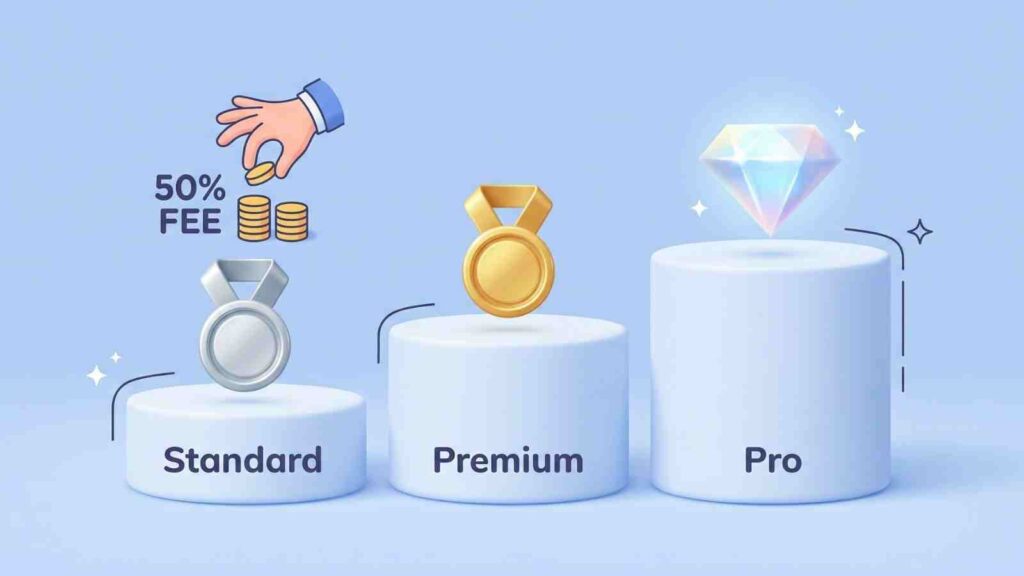
As it stands, every Redbubble artist account is classified into one of three tiers:
- Standard – New or lower-selling accounts. As of September 2025, Standard accounts are charged a 50% platform fee on monthly earnings. So if you earn £20 in a month, you keep £10.
- Premium – Artists with an established following or strong sales. Premium accounts are charged a 20% platform fee on monthly earnings.
- Pro – Top sellers and Artist Ambassadors. Pro accounts pay no platform fee at all.
There’s also an Excess Markup Fee — if you set your product markup above 20%, Redbubble charges an extra 50% fee on any earnings above that threshold. The advice? Keep your markup at 20% or below to avoid this.
There is a fee cap, though — you’ll never be charged more than $150 in fees in any given month, which protects higher earners a little.
I’ll be straight with you: the Standard tier fees are tough, especially if you’re making modest sales. If you earn a small amount and half of it disappears in fees, the motivation can take a hit. But here’s the thing — you’re never charged if you make no sales. You’re never out of pocket. It’s still a risk-free platform in that sense.

The Pros ✅
1. It’s completely free to start No listing fees, no monthly subscriptions. You upload, you list, and you only pay fees if you make a sale. For testing the waters, it’s brilliant.
2. Massive product range Your design can go on everything from stickers and phone cases to full-size duvets and wall art. One design, dozens of products — it’s surprisingly satisfying seeing your artwork on a mug.
3. Truly passive (once it’s set up) Once your designs are uploaded and properly set up, you don’t have to do a thing. Orders come in, Redbubble fulfils them, and you get paid. I’ve had sales from designs I’d completely forgotten about.
4. No inventory, no hassle No stock to buy, no packing tape, no trips to the post office. Redbubble handles it all.
5. Creative freedom You can upload whatever you like (within their content guidelines). Niche, quirky, heartfelt, funny — there’s a market for all sorts.
6. It’s genuinely enjoyable if you like designing This is a big one for me. I don’t find it a chore because I actually enjoy the creative side. If you love making things, this feels less like “work” and more like a hobby that occasionally pays you.
The Cons ❌
1. The fees have got worse The tier system introduced in 2023 (and updated significantly in 2025) means Standard accounts lose 50% of their earnings to platform fees. That stings, especially when you’re making modest sales to begin with.
2. It’s incredibly competitive There are over 2.8 million artists on Redbubble. Popular, generic designs get absolutely buried. Standing out is genuinely hard.
3. Payouts are slow and small You need to earn at least $20 (roughly £15-16) before you get paid out. For small sellers, that can mean waiting months between payouts. The pennies do roll in — but slowly.
UPDATE: I recently received this email, so it looks like payouts begin at smaller amounts now –
Hey Redbubble Artists,
We have some good news to share: starting July 1, 2026, we’re lowering the payment threshold on Redbubble from $20 / £20 / €20 to $10 / £10 / €10.
What this means: As soon as your earnings balance reaches $10 / £10 / €10 or more, this will trigger a payout during our next monthly payrun.
Our goal is to get artists’ money into their pockets quicker, and this will allow artists to receive more frequent payments.
4. Redbubble controls everything Pricing, search visibility, fee structures — Redbubble decides all of it, and they can (and do) change the rules. You’re building on someone else’s platform, which always comes with that risk.
5. Your shop can easily get lost Without good titles, tags, and promotion, your designs simply won’t be found. The platform doesn’t do the marketing for you — that’s on you.
What I’ve Learnt (The Stuff That Actually Matters)
After a couple of years of trial, error, and the occasional pleasant surprise in my emails, here’s what I’d tell anyone starting out:
🖼️ Image Quality is Everything
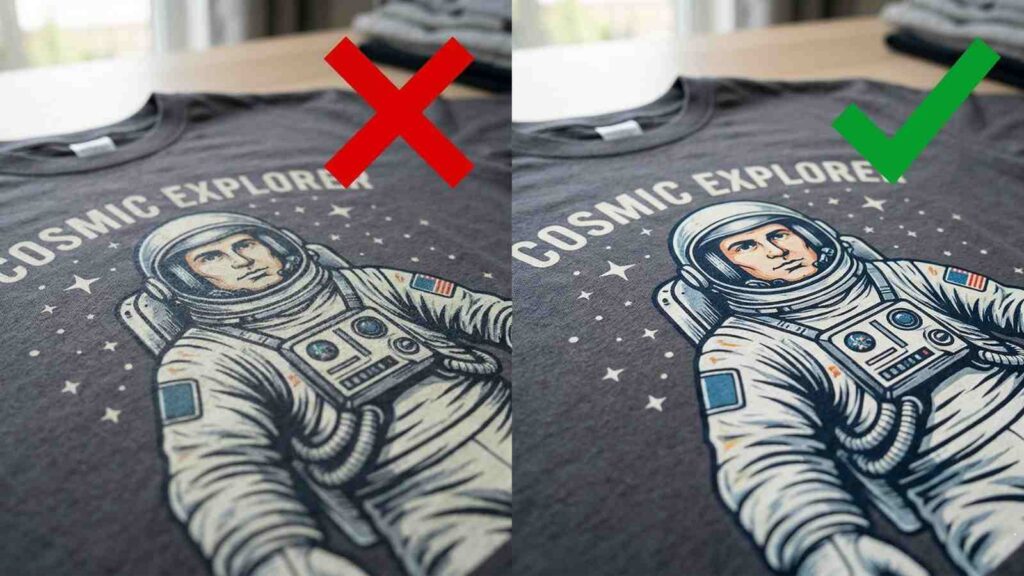
Your designs need to be high resolution. If your image is low pixel count, it will look blurry and pixelated on larger products like t-shirts and duvet covers — and no one wants to buy a fuzzy design. Go as high resolution as you can from the start.
📐 Check Every Single Product
When you upload a design, Redbubble applies it across all the products automatically — but the positioning is rarely perfect on all of them. Go through them individually and adjust the placement on each product type. A design that looks great on a sticker might be wonky on a phone case or cut off on a t-shirt.
🏷️ Titles and Tags Are Non-Negotiable
No one will stumble across your work if it’s not searchable. Write descriptive, specific titles and use all the tags available to you. Think about what someone would type into a search bar if they were looking for your design. Be thorough.
🎯 Go Niche
This is probably the most important tip of all. There are millions of designs on Redbubble — generic cat designs, sunset landscapes, and “funny” slogans are absolutely everywhere. Go niche. The deaf awareness designs I created for myself? Those have a specific, passionate audience who actually searches for them. Niche designs in underserved categories have a much better chance of being found and bought.
📂 Use Categories
Organise your shop with categories so visitors can actually browse and find things. An unorganised shop is a missed opportunity.
📌 Promote on Pinterest
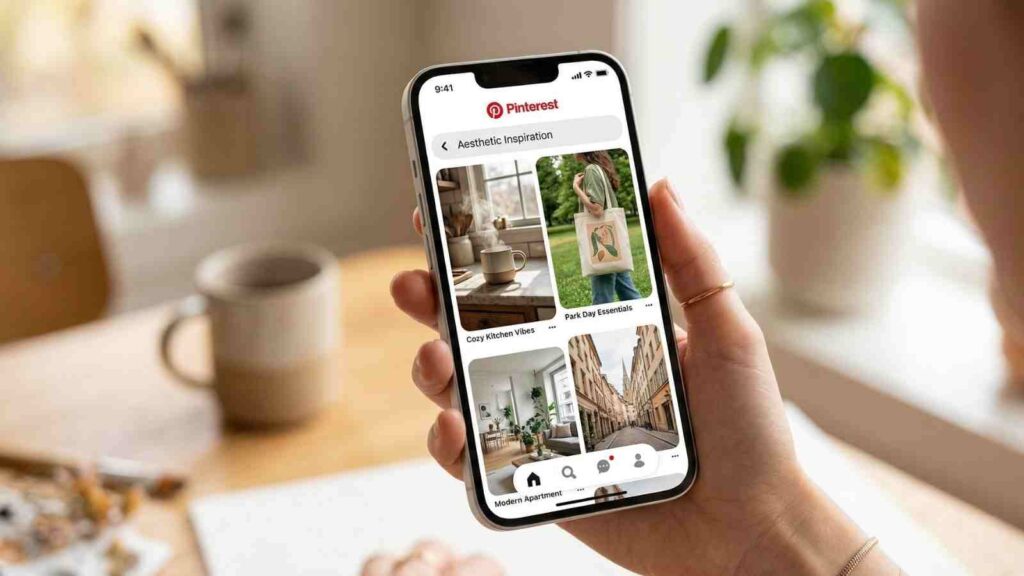
Pinterest and Redbubble are a natural match. Pinterest users are often in “shopping mode” or browsing for gift ideas, and pins have a long shelf life — unlike posts on other social platforms that disappear after a day or two. Link your designs to Pinterest and you’re giving them a whole extra avenue to be discovered.
Where My Shop Is Now (Honest Reflection)
Looking at my own shop with fresh eyes, I can see there’s plenty of room for improvement. The categories need tidying, some designs need better titles and tags, and I could be doing much more on Pinterest. So I’m marking it in my calendar — I’m going to spend some proper time improving the shop and adding fresh designs, and then I’ll come back in six months and report back honestly on whether it’s made a difference.
Will I make my fortune? Absolutely not. But will it be more fun than a second job, gradually earn a bit of side income, and scratch my creative itch? Almost certainly yes.
Is Redbubble Worth It in 2026?
Honestly? It depends on your expectations.
If you’re expecting to quit your job and live off Redbubble income within a year, it’s not for you — at least not without a huge, dedicated effort and a lot of luck.
But if you enjoy designing, you’re happy to treat it as a creative hobby with an occasional financial bonus, and you understand it’s a long game — then yes, absolutely. It costs nothing to start, you’re never out of pocket, and the odd payout landing in your account from a design you uploaded two years ago still feels genuinely brilliant.
Just go in with realistic expectations, focus on quality over quantity, get your tags right, go niche, and enjoy the process. The pennies will follow.
Have you tried Redbubble? I’d love to hear how you’re getting on — drop a comment below!
And if you want to have a nosy at my eclectic little shop, you can find it here: MiowandMolly on Redbubble
Posted in: Side Hustles, Passive Income, Creative Income
