
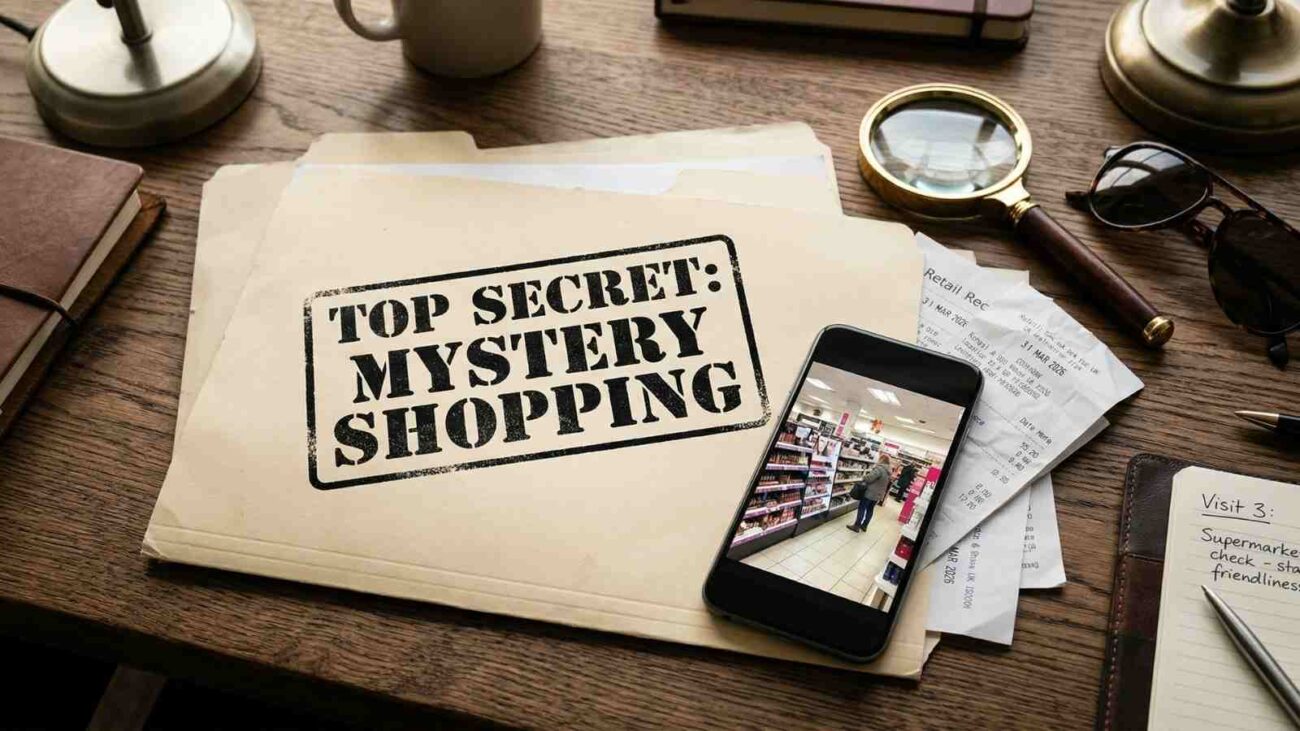
Right, let’s start with the obvious question. Can you actually make decent money from mystery shopping? The honest answer is: yes, sometimes — but probably not as much as you’d like, and definitely not as much as you could fifteen years ago.
I know, because I’ve been doing it for fifteen years. On and off, more on at the start, considerably more off lately — but I still do it, and I’d still recommend it, with a few caveats I’ll get to in a moment.
So what actually is mystery shopping?
If you’ve never heard of it, the idea is simple. Companies pay you to visit their shops, restaurants, hotels, attractions — anywhere that has customers, basically — and pretend to be one of them. You report back on how the experience was: how you were greeted, how long you waited, whether the staff followed their training, that sort of thing. You’re essentially a secret quality inspector, and the businesses themselves are paying for the privilege of being inspected.
The reason they do it is because staff behave differently when they think no one important is watching. You and I both know this. Mystery shoppers are the way companies find out what actually happens on the shop floor when the area manager isn’t in.

My fifteen years of mystery shopping — the highlights, the low points, and the free holiday
When I first started, the pay was genuinely decent. You could put a reasonable amount of time in and come away feeling like it had been worthwhile. These days the rates have dropped quite a bit across the board — there’s more competition, more shoppers on the books, and the companies know it. That’s just the reality of it in 2026, and I’d rather tell you that upfront than have you sign up expecting to make a fortune.
That said, I still do it. And here’s why.
The free meals. This is what keeps me coming back, if I’m honest. When I’m travelling — which I do quite a bit — I’ll often have a restaurant assignment lined up. I need to eat something anyway, I’m sat on a train with nothing to do, so why not get my dinner paid for and earn a few quid at the same time? It’s genuinely one of the better life hacks I know.
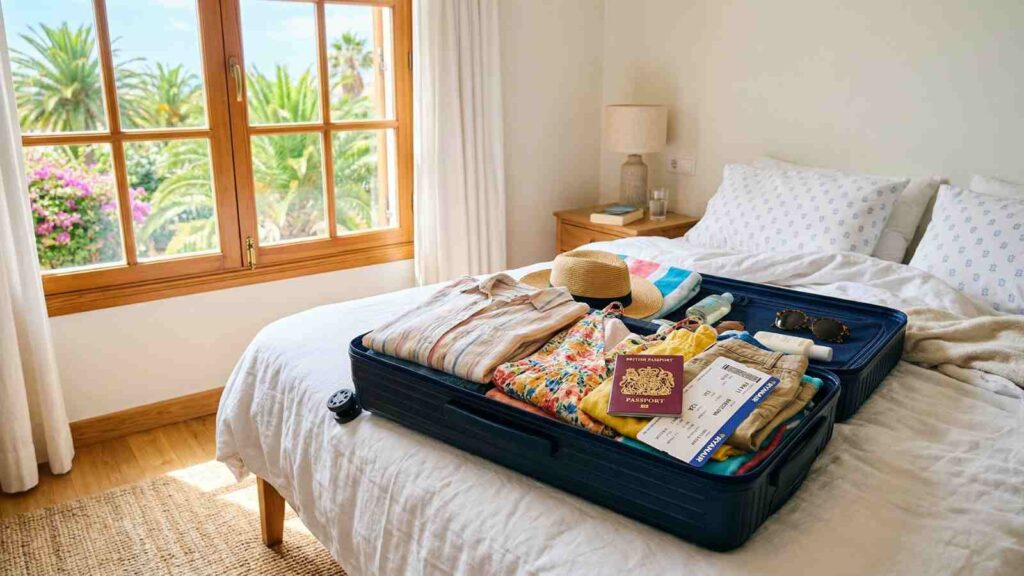
The free holiday. Yes, this really happened. I’m not going to go into huge detail because honestly it still feels a bit like I’m making it up, but yes — I once got a free holiday through mystery shopping. These kinds of assignments exist, they’re rare, and they tend to go very fast, but they’re out there. Worth keeping your eyes open for.
The experiences. Over fifteen years I’ve visited places, tried things, and gone to events I probably wouldn’t have otherwise. That’s worth something too, even when the pay is modest.
The less glamorous bits
Let me be real with you about the downsides, because nobody talks about these enough.
Some assignments are just not worth your time. I’ve done shops that took forever, involved a ridiculous amount of form-filling afterwards, and earned me next to nothing for the effort. You get a feel for it after a while — you learn to look at an assignment and quickly work out whether the time-to-pay ratio makes any sense. In the beginning though, you might take on a few duffers before your radar kicks in.
The embarrassment factor is real. Mystery shopping sounds very smooth and undercover when you describe it. In practice, you sometimes have to ask slightly strange questions, behave in ways that feel completely unnatural, or engineer situations that make you look, frankly, a bit peculiar. I have stood in shops asking questions I would never in a million years ask as a real customer, feeling like everyone within a ten-metre radius could tell something odd was going on. You develop a thick skin, but it takes time.
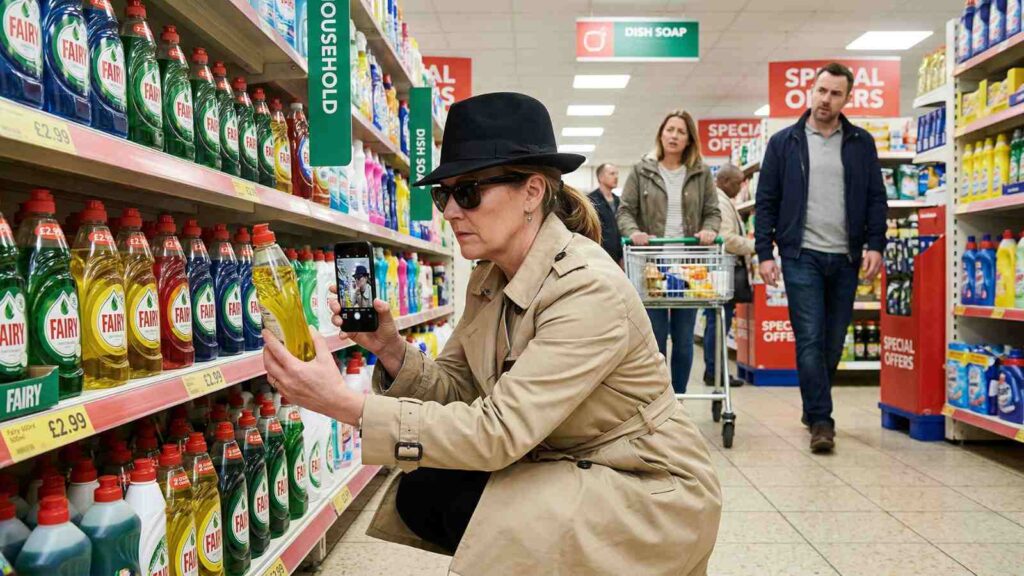
Sometimes they know. This is the strangest dynamic in mystery shopping, and it happens more than you’d think. You walk in, and something in the air just tells you that the staff are aware a mystery shopper might be visiting today. They’re performing their best selves. You know they know. They know that you might know. And yet both parties carry on doing the whole pantomime anyway — you pretending to be a normal customer, them pretending to not be on their absolute best behaviour. It’s bizarre. But you still fill in the form, they still get their score, and everyone goes home.

What you actually need to get started
This is the practical bit, so pay attention.
A smartphone with a decent camera and reliable internet. This is non-negotiable. Most assignments involve taking photographs — of receipts, of displays, of the exterior of a building, sometimes of food — and you’ll often need to upload everything on the spot or shortly afterwards.
Attention to detail. Mystery shopping reports are specific. They want to know if the member of staff smiled within fifteen seconds of you entering, whether they mentioned the promotion, whether the toilets had soap. You need to be able to absorb details and recall them accurately, ideally while acting completely natural.
Good written English. You don’t need to be a professional writer, but your reports need to be clear, factual, and written up fairly promptly after the visit while everything is fresh. Sloppy or vague reports get rejected, and you don’t get paid for rejected reports.
Patience at the start. Every company has its own way of doing things, its own platform, its own style of briefing. Most will ask you to pass a test before you can take on any assignments — nothing scary, just a check that you understand what’s expected. Accept this, do the test properly, and start with simpler jobs while you find your feet.
A note on recording. Some assignments — particularly those involving financial services or call centres — ask you to make audio or video recordings. These tend to pay better. I’d suggest leaving those until you’re a bit more experienced, and frankly they’re optional. Plenty of straightforward assignments don’t require anything like that.

A few tips from someone who’s been doing this a long time
Join several companies. The job boards on each platform are different, and you’ll get more choice if you’re registered with four or five companies rather than just one. Plus if one goes quiet, another might be busy.
Don’t overcommit early on. Take one assignment at a time until you’re confident with the process. Missing a deadline or submitting a dodgy report early on can affect your ratings on a platform, which affects the assignments you’re offered later.
Read the brief. Properly. All of it. Before you go. Mystery shops have very specific instructions, and turning up without fully understanding what’s expected of you is how reports get rejected.
Write up your report the same day, ideally straight afterwards. Memory is not as reliable as we all think it is, especially for fine detail.
Be realistic about earnings. You’re probably not going to replace your income with mystery shopping. But if you’re going somewhere anyway — a retail park, a restaurant, a theme park — and you can get your visit paid for plus earn a bit on top? That’s a genuinely good deal.
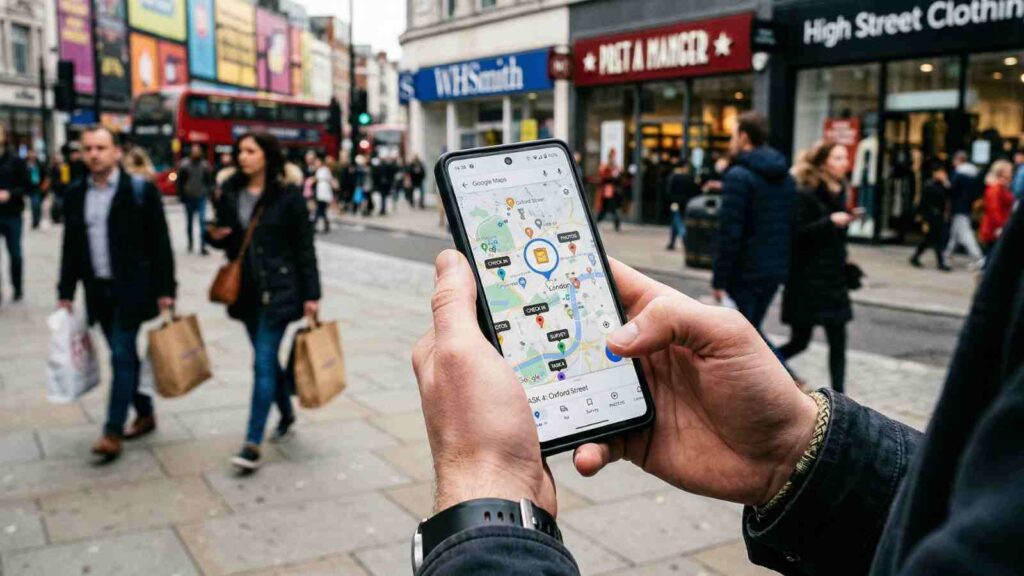
Where to sign up — UK mystery shopping companies and apps
Here’s a list of reputable places to get started. I’d suggest signing up to a handful rather than all of them at once — get the hang of a couple of platforms first.
Traditional Mystery Shopping Companies (These tend to have more in-depth assignments, often involving restaurants, hotels, and retail visits with longer reports — and usually better pay)
iShopFor Ipsos — ishopforipsos.com One of the most well-regarded names in UK mystery shopping. Ipsos is a valued member of the Mystery Shopping Professionals Association, and registration is always free. You can see the payment and reimbursement for each job before you accept it. Ipsos Mystery Shopper Good range of assignments, reliable payment.
Proinsight — proinsight.org A UK-based company that welcomes both new and experienced mystery shoppers, with opportunities to work from home as well as in-person visits. Proinsight
Tern — tern.co.uk One of the UK’s longest-established mystery shopping agencies, set up in 1989, with a field team of over 20,000 shoppers, researchers and auditors across the country. Tern Consultancy Ltd Worth registering with.
Red Wigwam — redwigwam.com Mentioned regularly by experienced mystery shoppers as offering fair pay and good support. Worth noting that Red Wigwam operates more like a staffing agency, so you will pay PAYE tax on earnings here The Money Shed — keep that in mind.
Grassroots — grassrootsmysteryshopping.com A well-established UK company with a variety of retail and hospitality assignments.
JKS Mystery Shopping — jksmysteryshopping.co.uk A UK-based company with thousands of experienced mystery shoppers across the country. JKS Mystery Shopping
Apps — Quicker Tasks, Lower Pay, But Great for Fitting Around Your Day (These are more about quick in-store tasks — photographing a shelf display, checking stock — rather than full restaurant visits. Less pay, less effort, great for when you’re already out and about)
Field Agent — available on iOS and Android Tasks commonly include capturing photos or videos, counting items on a shelf, checking a price, or filling in a survey. Most tasks offer around £5 and take between 5 and 10 minutes to complete. A solid one to have on your phone.
BeMyEye — bemyeye.com — available on iOS and Android Often you don’t have to buy anything — you just head into a shop, take a few pictures of a display, and share your thoughts. Expect £3–£10 for quick tasks. Good for beginners.
Roamler — roamler.com — available on iOS and Android Similar to BeMyEye, with in-store audits at supermarkets, pubs, restaurants and petrol stations. Roamler is invite-only, but requesting an invite via their UK Facebook page usually does the trick. You’ll need to complete some unpaid training tasks first, but it’s straightforward enough.
Shepper — shepper.com A newer app with a range of quick tasks. Often cited alongside Field Agent and BeMyEye by regular mystery shoppers.
A Note on Finding More Companies
The MSPA (Mystery Shopping Professionals Association) is the industry trade body and a good starting point for finding legitimate companies — if a company is a member, it’s generally a safer bet. Their website lists members at mspa-eu.org.
Also worth keeping an eye on forums like MoneySavingExpert and the r/beermoneyuk subreddit — experienced mystery shoppers often share which platforms are currently active and paying well, which changes over time.
The bottom line
Mystery shopping isn’t a career. It’s not going to pay your mortgage, and anyone telling you otherwise is selling something. But it’s legitimate, it can be genuinely enjoyable, and if you’re clever about it — picking assignments that overlap with things you’re already doing — it can be a really nice little earner on the side.
Fifteen years in, I’m still at it. Slowly, selectively, and usually over a free dinner on a train. That’s good enough for me.
Have you tried mystery shopping? I’d love to hear your experiences — the wins and the disasters. Drop a comment below!
Tags: mystery shopping UK, side income, side hustle UK, make money in your spare time, free meals UK
